


If you have been watching the rental housing market, you have probably noticed something: more and more brand-new single-family homes and townhome communities are popping up that are designed entirely for renters. These are not your typical landlord-buys-a-fixer-upper properties. They are purpose-built communities constructed from the ground up with tenants in mind—and they represent one of the fastest-growing corners of residential real estate today.
This strategy is called build-to-rent (BTR) investing, and it is attracting attention from institutional players and individual investors alike. With homeownership becoming increasingly out of reach for millions of Americans, the demand for quality single-family rentals has never been stronger—and developers and investors are rushing to meet it.
In this guide, we will break down exactly what build-to-rent investing is, how it works, the pros and cons, and whether it might be a smart addition to your real estate portfolio.
[ Thinking about investing in real estate? Register to attend a FREE online real estate class and learn how to get started investing in real estate. ]
What Is Build-to-Rent?
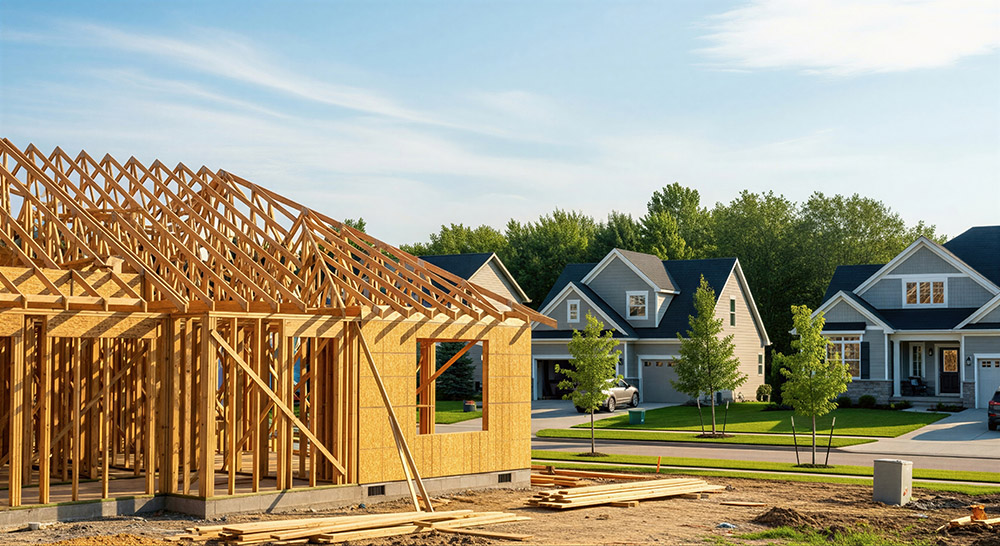
Build-to-rent (BTR), sometimes called built-for-rent (BFR), refers to residential properties—typically single-family homes, townhomes, or small-lot communities—that are constructed specifically for the purpose of renting them out. Unlike traditional rental properties, which an investor buys after a previous owner has lived in or rented them, BTR properties are new construction assets that were never intended for sale to an owner-occupant.
The distinction is important. When you buy an existing home and rent it out, you inherit the property’s age, quirks, deferred maintenance, and any previous owner’s choices. With build-to-rent, you start with a blank slate—modern systems, contemporary finishes, energy-efficient appliances, and a floor plan designed for today’s renters. The community itself is often planned with shared amenities like dog parks, fitness centers, or coworking spaces that make the rental experience feel closer to owning than renting.
BTR communities can range from large institutional developments with hundreds of homes managed by a single company, to smaller-scale projects where an individual investor builds one or a handful of homes specifically to hold as rentals.
How Does Build-to-Rent Investing Work?
At its core, build-to-rent follows a straightforward model: you build it, lease it, and hold it for long-term rental income. But the mechanics involve a few distinct steps.
First, a developer or investor acquires land in a market with strong rental demand. They work with architects and builders to design a community—or even a single home—tailored to what renters want: open floor plans, ample storage, home offices, and outdoor space. Construction financing (typically a construction loan or construction-to-permanent loan) funds the build.
Once the homes are completed, they are professionally marketed to renters and leased out. At that point, the construction financing is usually replaced by a permanent loan, such as a DSCR (Debt Service Coverage Ratio) loan, which qualifies based on the property’s rental income rather than the borrower’s personal income. The investor then collects rent, manages the property, and holds the asset for appreciation and cash flow.
There are two main types of BTR investors:
- Institutional investors — large private equity firms, REITs, and asset managers (think Invitation Homes, Progress Residential, Blackstone, and Carlyle) that develop and manage hundreds or thousands of BTR homes.
- Individual investors — smaller operators who build one home, a duplex, or a small BTR community and manage them as part of a personal portfolio.
Both approaches follow the same fundamental model; the scale is just different.
Why Is Build-to-Rent Growing?
The build-to-rent sector has not grown by accident. Several structural forces have converged to make it one of the most compelling corners of residential real estate.
Housing Affordability Has Reached a Breaking Point
Between 2019 and 2024, the income needed to qualify for a mortgage on a median starter home surged from $49,824 to $86,880, according to Apartment List—while the typical buyer’s income grew only modestly over the same period. Mortgage rates remained above 6% throughout 2025, compounding the affordability problem. Research shows it is now 45–50% more expensive to buy and maintain a starter home than to rent a comparable single-family property. This gap is pushing millions of households into the rental market—and keeping them there longer.
Millennials Want Space, But Cannot Afford to Buy
Millennials are in their peak family-formation years, but their homeownership rate tells a sobering story: only 47% of Millennials own homes, compared to 65% of Gen Xers and 74% of Baby Boomers at similar life stages, according to Apartment List’s 2025 Millennial Homeownership Report. Nearly 72% of non-owning Millennials cite inability to afford a down payment as their primary obstacle.
What they do want is the single-family lifestyle—a yard, a garage, good schools nearby—without necessarily owning. Build-to-rent communities deliver exactly that, which is a large part of why demand has been so strong.
The Rental Market Is Expanding
Renters accounted for nearly 80% of U.S. household growth in 2025, according to Arbor Realty Trust data. The total number of rental households grew by roughly 898,000 that year alone, raising the national total to approximately 46.1 million rental households. That is a massive, growing pool of tenants looking for quality housing.
Limited Housing Inventory
The United States has underbuilt housing for more than a decade. The shortage of available homes for sale creates a two-sided opportunity for BTR investors: fewer people can buy, so more people rent; and fewer homes are available to purchase, so investors who build their own assets are not competing in a bidding war for existing properties.
According to NAHB’s Eye on Housing, single-family built-for-rent completions hit a record 113,000 units in 2024 (per Harvard’s Joint Center for Housing Studies), representing 16% of all new rental units delivered that year. BTR starts have also grown more than 134% since 2019. While starts moderated in 2025 and into 2026 due to elevated financing costs, the long-term structural demand remains firmly in place.
Build-to-Rent vs. Traditional Rental Properties
Not sure how BTR stacks up against buying an existing rental property? Here is a direct comparison:
| Feature | Build-to-Rent | Traditional Rental |
|---|---|---|
| Property Age | Brand new construction | Often older; deferred maintenance common |
| Maintenance Costs | ~4% of revenue (vs. 7% industry avg.) | Higher; aging systems and appliances |
| Tenant Appeal | Modern amenities, community features | Varies; depends on property condition |
| Financing | Construction loan + DSCR or CTP loan | Conventional, DSCR, or hard-money loans |
| Appreciation Potential | Solid in growth markets; slower if oversupplied | Can be strong in established neighborhoods |
| Cash Flow | Strong with lower vacancy & maintenance | Variable; depends on condition and market |
| Vacancy Costs | ~2.09% (below industry average) | ~5% industry average |
| Management | Professional; often built into the model | DIY or third-party; variable quality |
BTR tends to shine on maintenance efficiency, tenant quality, and vacancy performance. Traditional rentals can offer lower entry costs and more flexibility in certain markets—but they also come with more unknowns.
Pros of Build-to-Rent Investing
1. Lower Maintenance Costs
New construction means new everything. HVAC systems, roofs, appliances, plumbing—all under warranty and years away from major capital expenditures. Industry data suggests BTR maintenance costs average around 4% of revenue, compared to the industry standard of approximately 7% for older rental properties. That difference goes straight to your bottom line.
2. Lower Vacancy and Strong Tenant Retention
BTR communities consistently outperform older rental stock on occupancy. Industry data shows BTR vacancy costs average roughly 2.09% compared to the broader industry average of around 5%. Tenants in BTR communities often sign longer leases—sometimes up to three years—because they value the quality, amenities, and management professionalism. Longer stays mean lower turnover costs and more predictable income.
3. Purpose-Built Amenities Attract Quality Tenants
Dog parks, fitness centers, coworking spaces, community pools, package lockers—BTR communities are designed to compete with homeownership for the tenant’s loyalty. This lifestyle value proposition attracts higher-income renters who treat the home with greater care and stay longer.
4. Outperformance vs. Traditional Multifamily
BTR communities have outperformed traditional multifamily assets by approximately 180 basis points. As of Q1 2025, blended BTR rents grew 1.3% year-over-year, and lease renewals increased 2.5%—a meaningful premium over conventional apartment performance.
5. Professional Management Built In
Whether you invest through an institutional partnership or hire a property management company for your own BTR homes, the professional management model is built into the BTR ecosystem in a way that traditional buy-and-hold investing often is not. This makes BTR more passive-friendly once stabilized.
Potential Drawbacks
No investment strategy is without risk. Here is a balanced look at the challenges of build-to-rent:
Higher Upfront Capital
Acquiring land and building from the ground up costs significantly more than buying an existing home. Between land, site work, construction, and carrying costs during the build, BTR projects require serious capital—or access to good financing.
Development Timeline Delays Cash Flow
Even in the best-case scenario, you are looking at six months to two years from groundbreaking to your first tenant’s move-in date. Add lease-up time, and it could be two to three years before a project is fully stabilized. If you need income quickly, BTR may not be the right fit.
Financing Is More Complex
Construction loans typically require a strong credit profile, reserves, and a clear exit strategy. Transitioning from a construction loan to a permanent DSCR loan adds a step that traditional buy-and-hold investors do not face. That said, the financing landscape for BTR has matured significantly, with more lenders offering construction-to-permanent (CTP) loan products.
Zoning and Permitting Challenges
BTR is still a relatively new asset class in many U.S. markets. Local zoning laws may not have caught up, and some municipalities have pushed back on large BTR developments. Research your market’s regulatory environment before committing to a project.
Market Saturation Risk
The Sun Belt markets that have attracted the most BTR investment—Phoenix, Dallas, Atlanta—have also seen the most new supply. In Q1 2025, the Southwest saw BTR rent growth decline 2.9% year-over-year due to a wave of new completions. Oversupplied markets can compress rent growth and slow lease-up timelines.
Pros and Cons at a Glance
| Pros | Cons |
|---|---|
| New construction — no deferred maintenance | Higher upfront capital required |
| Lower maintenance costs (~4% vs. 7% avg.) | Development timeline of 6–24 months |
| Lower vacancy costs (~2.09% vs. 5% avg.) | Construction financing is more complex |
| Strong, growing tenant demand | Local zoning and permitting challenges |
| Community amenities improve tenant retention | Market saturation risk in some Sun Belt markets |
| Longer average lease terms and renewals | Interest rate sensitivity during construction |
| Professional management built into the model | Slower lease-up period before cash flow begins |
| BTR outperformed multifamily by 180 bps | Appreciation may lag in oversupplied markets |
Can Individual Investors Invest in Build-to-Rent?
Absolutely—and this is one of the biggest misconceptions about BTR. The sector has historically been dominated by institutional capital, but individual investors can and do participate in several ways.
Build One Home at a Time
The simplest entry point is to work with a builder to construct a single-family home specifically designed for renting. You choose the market, the floor plan, and the finishes with a tenant profile in mind—then lease it once complete. This is BTR at the individual level, and thousands of investors are doing it in Sun Belt markets today.
Small-Scale BTR Communities
Some investors purchase a lot, subdivide it (where zoning allows), and build two to ten rental homes on a single parcel. This creates small-scale BTR efficiencies: shared management, easier professional oversight, and a community feel that attracts longer-term tenants.
Partner with Developers
If you have capital but not the expertise to manage construction, you can invest as a limited partner in a BTR development fund or joint venture. Institutional developers frequently raise equity from private investors to fund projects.
Financing Your BTR Project
For individual investors, BTR financing typically follows a two-phase model:
- Phase 1 — Construction loan: Short-term, interest-only financing that funds the build. Requires good credit, reserves, and a clear exit plan.
- Phase 2 — DSCR loan: Once the home is built and leased, a Debt Service Coverage Ratio loan replaces the construction loan. DSCR lenders qualify based on the property’s rental income—not your personal tax returns or W-2s—making this financing option especially friendly to real estate investors.
Construction-to-permanent (CTP) loans combine both phases into a single closing, reducing the paperwork and refinancing costs associated with transitioning between loans.
Build-to-rent is no longer a game reserved for Wall Street. With the right market, the right builder relationships, and the right financing, individual investors can build their own BTR assets and benefit from the same structural tailwinds driving institutional capital.
Best Markets for Build-to-Rent
Not every market is equally suited for BTR investing. The strongest BTR markets share a few key characteristics: population growth, strong job creation, relatively affordable land, favorable landlord laws, and robust renter demand. Here are five markets that have consistently attracted significant BTR investment as of July 2026.
Dallas-Fort Worth, Texas
DFW is one of the largest and most active BTR markets in the country, with a BTR inventory exceeding 14,682 units and a pipeline of roughly 8,450 additional units. Dallas-Fort Worth benefits from massive corporate relocations, a large millennial workforce, no state income tax, and a well-established builder network. Land remains more affordable than coastal metros, and renter demand is consistently strong.
Phoenix, Arizona
Phoenix led the nation in BTR completions in 2024, delivering 4,460 new units—an 18% year-over-year increase. Its pipeline of approximately 13,010 units (representing 18% of the entire national BTR pipeline) reflects enormous investor confidence. Strong in-migration, a growing tech sector, and a warm climate make Phoenix one of the most-watched BTR markets. Investors should note that new supply has put some pressure on rents in the short term.
Atlanta, Georgia
Atlanta’s BTR market has grown at a remarkable pace—inventory expanded roughly 15x over five years, from approximately 547 units to more than 8,100. Georgia’s business-friendly environment, major employer presence, and affordable land relative to coastal markets continue to drive BTR development and demand.
Charlotte, North Carolina
Charlotte has one of the largest BTR pipelines in the Southeast at approximately 4,886 units. A booming financial services sector, strong population growth, and an expanding transit network make Charlotte attractive to the professional renter demographic that BTR communities are designed to serve.
Tampa, Florida
The Tampa-St. Petersburg-Clearwater metro has built a solid BTR footprint of roughly 4,204 units. Florida’s landlord-friendly laws, tax advantages, continued population growth, and lifestyle appeal—particularly for remote workers—create favorable conditions for BTR investment.
When evaluating any market, look for population growth of at least 1% annually, a diversified job base, a gap between what it costs to buy versus rent, and a track record of rent growth over the prior three to five years.
Is Build-to-Rent a Good Investment?
The honest answer: it depends on your goals, capital, timeline, and market selection.
For investors who can tolerate a longer path to stabilization, have access to construction financing, and are willing to do the work of vetting markets and builders, build-to-rent offers a compelling combination of lower maintenance costs, strong tenant demand, and the potential to create a high-quality asset from scratch.
The structural tailwinds are real: affordability constraints are keeping millions of Americans in the rental market for longer, demand for single-family rental living is growing, and the supply gap in most markets means quality BTR properties will attract tenants. BTR communities have demonstrated occupancy and retention advantages over older rental stock, and the asset class has outperformed traditional multifamily on a risk-adjusted basis.
At the same time, BTR is not a passive get-rich-quick strategy. You are taking on development risk, financing complexity, and a longer runway before income begins. Oversupplied markets require careful underwriting. And as NAHB data shows, BTR construction starts fell roughly 19% in 2025 and have continued to moderate into 2026, reflecting the pressure of elevated interest rates on development economics.
The investors who will do best in BTR are those who underwrite conservatively, choose their markets carefully, build or partner with experienced teams, and think in terms of a five-to-ten-year hold—not a quick flip.
Frequently Asked Questions
What is build-to-rent?
Build-to-rent is a real estate investment strategy in which residential homes—typically single-family homes or townhomes—are constructed specifically to be rented out rather than sold to owner-occupants. BTR properties are purpose-built for tenants and are often managed professionally.
Is build-to-rent profitable?
BTR can be profitable, particularly for investors in strong rental markets who underwrite their projects conservatively. The model benefits from lower maintenance costs, higher occupancy rates, and longer tenant retention than older rental stock. Profitability depends heavily on market selection, construction costs, financing terms, and local rent growth.
Can individual investors build rental homes?
Yes. Individual investors can build single BTR homes using construction loans followed by DSCR loans, work with local builders as owner-developers, or invest as limited partners in larger BTR development projects. The strategy is no longer exclusive to institutional capital.
Is build-to-rent only for large institutions?
No. While large firms like Invitation Homes and Blackstone have attracted the most media attention, thousands of individual investors participate in BTR by building one or a few homes at a time in strong rental markets. The fundamentals are the same at any scale.
How do you finance a build-to-rent project?
Most BTR projects use a two-phase financing approach: a construction loan to fund the build, followed by a DSCR rental loan once the property is leased. Construction-to-permanent (CTP) loans combine both phases into a single closing. DSCR loans are particularly popular because they qualify based on the property’s rental income rather than the borrower’s personal income.
Key Takeaways
- Build-to-rent properties are purpose-built residential homes designed for long-term rental, not resale.
- Record housing affordability challenges and elevated mortgage rates are keeping millions of Americans in the rental market for longer, driving sustained BTR demand.
- BTR communities have outperformed traditional multifamily by approximately 180 basis points, with lower vacancy costs (~2.09% vs. 5% avg.) and maintenance costs (~4% vs. 7% avg.).
- Individual investors can participate in BTR by building single homes, developing small communities, or partnering with experienced developers.
- DSCR loans and construction-to-permanent (CTP) financing have made BTR more accessible for non-institutional investors.
- Top BTR markets include Dallas-Fort Worth, Phoenix, Atlanta, Charlotte, and Tampa—all sharing strong population growth, job creation, and rental demand.
- BTR carries real risks: higher upfront costs, development timelines, complex financing, zoning challenges, and oversupply risk in some markets.
- Conservative underwriting, careful market selection, and a long-term hold mentality are essential for success in BTR investing.
Final Thoughts
Build-to-rent investing represents a genuine structural shift in the U.S. housing market—not a passing fad. The forces driving it (affordability constraints, millennial family formation, and a persistent housing shortage) are unlikely to reverse quickly. That means quality BTR assets in strong markets are likely to remain in demand for years to come.
But as with any real estate strategy, execution matters as much as the macro tailwind. Do your local market research. Underwrite conservatively—assume your construction costs will run 10% over budget and your lease-up will take longer than expected. Understand your exit options before you start. And think long-term: BTR is a hold strategy, not a flip.
Whether you build one home or develop a ten-unit BTR community, the fundamentals are the same: find a market where people want to rent single-family homes, build something they will be proud to call home, and hold it for the long run. That is a strategy that has worked for investors in every cycle—and BTR gives you a modern, efficient way to execute it.
Ready to start taking advantage of the current opportunities in the real estate market?
Click the banner below to take a 90-minute online training class and get started learning how to invest in today’s real estate market!


Article Sources
- NAHB Eye on Housing — “Flat Growth for Single-Family Built-for-Rent” (May 2025)
- NAHB Eye on Housing — “Single-Family Built-to-Rent Slowed at Start of 2026” (May 2026)
- NAHB Eye on Housing — “Soft Conditions for Single-Family Built-for-Rent” (January 2026)
- NAHB Eye on Housing — “Weaker Conditions for Single-Family Built-for-Rent Housing” (March 2026)
- National Apartment Association — “Build-to-Rent Through Q1 2026”
- Apartment List — “2025 Millennial Homeownership Report”
- Arbor Realty Trust — “Renters Now Represent 80% of U.S. Household Growth”
- LendingOne — “Top Build-to-Rent Markets in 2025”
- Cavan Companies — “Build-to-Rent 2025: A Strategic Investment Outlook”
- Gatsby Investment — “Build-to-Rent Pros and Cons”
- LendSure Home Loans — “Build-to-Rent Loans: Financing Rental Construction from the Ground Up”

